Crisis Comm; The Day Iowa Forgot How To Count
The first and most important job of crisis communication is to clearly communicate what is happening. The Iowa Democratic Party has completely failed at that task.
Greg Byrne
As a PR student who is also a political junkie, the ongoing fiasco of the Iowa caucuses has captured most of my attention for the past week. Traditionally the "first in the nation" to hold its presidential nominating contest, the Iowa caucus has long had an important place in both major parties' selection process. Candidates shape their entire strategy around getting a strong result in Iowa; winning the caucus can turn an existing frontrunner into a guaranteed victor or it can catapult an unknown into the national spotlight. But it can't do that this year, because the process has failed to identify an agreed upon winner. And that failure could end up permanently downgrading how the Iowa caucus is seen both in the political realm and by the public at large. This piece is not going to be about the political fallout; there has already been much digital ink spilled about that. Instead, it is going to focus on the traditional steps of crisis communication and how the failure to implement them well has tarnished the image of the Iowa caucus as an institution and the Iowa Democratic Party as an organization.
Step 1: Readiness
In order to be able to respond to a crisis, you have to be aware of what the situation is before a crisis occurs. You have to know what the existing threats to your organization's image are. Long before the fiasco that happened last week, the Iowa caucus had been facing criticism from political observers and activists. They said that it was unfair that a state which is over 90% white should have the first contest for a country that is nearly a third nonwhite or a party that is nearly half nonwhite. They said that a small, rural state is not a good testing ground for running a national campaign. They said that the requirement to be in a specific physical place at a specific time to vote was discriminatory towards people with kids or working the night shift that lack control over their schedule, and toward people with disabilities who cannot participate in the process without special accommodations.
The IDP attempted to address some of these concerns for this caucus by holding special "satellite caucuses" for people who could not be present at their assigned caucus site. Whether because they were out of the state at the time or because their assigned caucus site was not accessible to people with disabilities. Some of these caucuses were held in Spanish and some were held in American Sign Language, both the first of their kind in the state's history. If the caucus had gone smoothly on Monday night, the IDP would likely be getting positive press for attempting to make their process more inclusive. But of course, as the night wore on, that isn't the kind of earned media they got.
Step 2: Response
In every prior primary cycle, and in the Republican caucus that also happened on Monday, results from Iowa started to trickle around 8:30 p.m. ET and national media had enough data to project a winner by the next morning. This cycle, it took until 5 p.m. on Tuesday for partial results to be released, and as of this writing the Associated Press says that it is "unable to declare a winner" due to irregularities in the counting of votes and the tabulation of state delegates. On the night of the caucus, Pete Buttigieg declared victory before any results had been released, and the Bernie Sanders campaign released its own unofficial results showing him leading both the popular vote and the state delegate count. The results that have been released showed Sanders leading Buttigieg in raw vote totals but Buttigieg holding a razor thin margin in state delegates, the metric that has traditionally been used to determine the winner of the Iowa caucus. The intended response was to simply count the results, make sure they were accurate, and then release them as they were received. Under normal circumstances, this is all the IDP is expected to do on caucus night, but it was not nearly enough to fill the information void left by a lack of an agreed upon result.
Step 3: Reassurance
The first and most important job of crisis communication is to clearly communicate what is happening. It is to respond to the public's genuine concerns and reassure them that the organization has control of the situation. The Iowa Democratic Party has completely failed at that task. IDP spokesperson Mandy McClure issued the organization's first public statement on Monday night. It simply stated that issues with a new smartphone app being used to tabulate results necessitated "quality checks" that delayed the release of results. She insisted that there was "not a hack or an intrusion" and that the underlying vote data was sound. For an extended period, that was the IDP's only statement about the matter. As results trickled in over the course of the week, and as news media began finding discrepancies in those results, the organization stayed silent. As the chaos around those discrepancies resulted in rampant conspiracy theories that the party had rigged results to favor Buttigieg over Sanders, the organization stayed silent. It wasn't until Democratic National Committee chair Tom Perez suggested a recanvass of results that the IDP decided to weigh in, to say that they would only remcanvass results if one of the campaigns requested it. When Perez said in an interview that he specifically wanted a recanvass of satellite caucues, contests where Sanders had performed disproportionately well, that was taken as further evidence of an anti-Bernie conspiracy and Perez had to walk it back. At every turn in this story, the IDP has been in an entirely reactive role, and not once has it tried to get out ahead of events to control the narrative.
Step 4: Recovery
As of this writing, the fallout from the Iowa caucus fiasco is still ongoing, which means that attempts at recovery are still ongoing. The Nevada Democratic Party has dropped plans to use software from the same vendor as Iowa in its caucus, and the DNC has said that the software used in Iowa will not be used in any future primary contest. The IDP plans to release final results and declare an official winner at noon on Monday, at which point any controversy will hopefully be overshadowed by the results of the New Hampshire primary the next day. At this stage in the process, the hope appears to be that the primary cycle will progress, the news cycle will move on, and that the IDP's troubles this year will be forgotten about by the time they have another competitive contest to manage. After all, the media has a short attention span; you can get away with a lot as long as there is more interesting stuff happening somewhere else.
But that is a risky strategy. If the media doesn't move on, if people don't forget, if the next Iowa caucus is a close race; people will remember that they botched the process last time and might not believe the result. There was already considerable resentment of the privileged place that Iowa's nominating contest holds in the process, this may lead the public and the national party to consider stripping Iowa of that status, either by demoting it to a later date or by penalizing candidates who treat it as an important contest. If the IDP does not attempt to take charge of the narrative by making substantive changes to ensure that a botched job like Monday's caucus cannot happen again, they deserve whatever happens next.
 About the Author
Greg Byrne is a public relations student at the Mayborn School of Journalism. He likes cycling, fantasy transit planning and electronic dance music. Sometimes, he does all of them at once.
Greg Byrne
As a PR student who is also a political junkie, the ongoing fiasco of the Iowa caucuses has captured most of my attention for the past week. Traditionally the "first in the nation" to hold its presidential nominating contest, the Iowa caucus has long had an important place in both major parties' selection process. Candidates shape their entire strategy around getting a strong result in Iowa; winning the caucus can turn an existing frontrunner into a guaranteed victor or it can catapult an unknown into the national spotlight. But it can't do that this year, because the process has failed to identify an agreed upon winner. And that failure could end up permanently downgrading how the Iowa caucus is seen both in the political realm and by the public at large. This piece is not going to be about the political fallout; there has already been much digital ink spilled about that. Instead, it is going to focus on the traditional steps of crisis communication and how the failure to implement them well has tarnished the image of the Iowa caucus as an institution and the Iowa Democratic Party as an organization.
Step 1: Readiness
In order to be able to respond to a crisis, you have to be aware of what the situation is before a crisis occurs. You have to know what the existing threats to your organization's image are. Long before the fiasco that happened last week, the Iowa caucus had been facing criticism from political observers and activists. They said that it was unfair that a state which is over 90% white should have the first contest for a country that is nearly a third nonwhite or a party that is nearly half nonwhite. They said that a small, rural state is not a good testing ground for running a national campaign. They said that the requirement to be in a specific physical place at a specific time to vote was discriminatory towards people with kids or working the night shift that lack control over their schedule, and toward people with disabilities who cannot participate in the process without special accommodations.
The IDP attempted to address some of these concerns for this caucus by holding special "satellite caucuses" for people who could not be present at their assigned caucus site. Whether because they were out of the state at the time or because their assigned caucus site was not accessible to people with disabilities. Some of these caucuses were held in Spanish and some were held in American Sign Language, both the first of their kind in the state's history. If the caucus had gone smoothly on Monday night, the IDP would likely be getting positive press for attempting to make their process more inclusive. But of course, as the night wore on, that isn't the kind of earned media they got.
Step 2: Response
In every prior primary cycle, and in the Republican caucus that also happened on Monday, results from Iowa started to trickle around 8:30 p.m. ET and national media had enough data to project a winner by the next morning. This cycle, it took until 5 p.m. on Tuesday for partial results to be released, and as of this writing the Associated Press says that it is "unable to declare a winner" due to irregularities in the counting of votes and the tabulation of state delegates. On the night of the caucus, Pete Buttigieg declared victory before any results had been released, and the Bernie Sanders campaign released its own unofficial results showing him leading both the popular vote and the state delegate count. The results that have been released showed Sanders leading Buttigieg in raw vote totals but Buttigieg holding a razor thin margin in state delegates, the metric that has traditionally been used to determine the winner of the Iowa caucus. The intended response was to simply count the results, make sure they were accurate, and then release them as they were received. Under normal circumstances, this is all the IDP is expected to do on caucus night, but it was not nearly enough to fill the information void left by a lack of an agreed upon result.
 |
| Iowa Democratic Party chair Troy Price after a sign fell from of his podium during a press conference. (image from The Hill) |
The first and most important job of crisis communication is to clearly communicate what is happening. It is to respond to the public's genuine concerns and reassure them that the organization has control of the situation. The Iowa Democratic Party has completely failed at that task. IDP spokesperson Mandy McClure issued the organization's first public statement on Monday night. It simply stated that issues with a new smartphone app being used to tabulate results necessitated "quality checks" that delayed the release of results. She insisted that there was "not a hack or an intrusion" and that the underlying vote data was sound. For an extended period, that was the IDP's only statement about the matter. As results trickled in over the course of the week, and as news media began finding discrepancies in those results, the organization stayed silent. As the chaos around those discrepancies resulted in rampant conspiracy theories that the party had rigged results to favor Buttigieg over Sanders, the organization stayed silent. It wasn't until Democratic National Committee chair Tom Perez suggested a recanvass of results that the IDP decided to weigh in, to say that they would only remcanvass results if one of the campaigns requested it. When Perez said in an interview that he specifically wanted a recanvass of satellite caucues, contests where Sanders had performed disproportionately well, that was taken as further evidence of an anti-Bernie conspiracy and Perez had to walk it back. At every turn in this story, the IDP has been in an entirely reactive role, and not once has it tried to get out ahead of events to control the narrative.
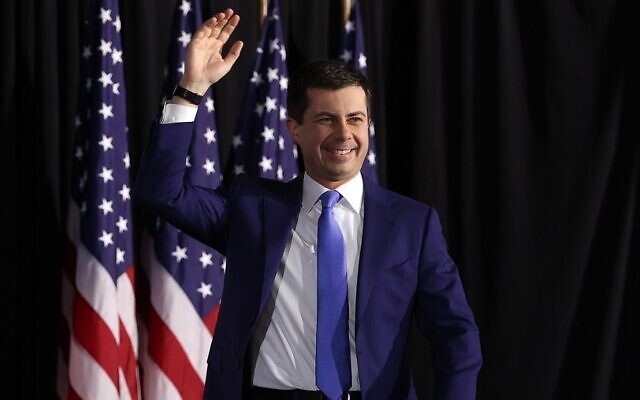 |
| Presidential candidate Pete Buttigieg declared victory in Iowa before official results were released. He ended up in a virtual tie with Senator Bernie Sanders. (Getty Images) |
As of this writing, the fallout from the Iowa caucus fiasco is still ongoing, which means that attempts at recovery are still ongoing. The Nevada Democratic Party has dropped plans to use software from the same vendor as Iowa in its caucus, and the DNC has said that the software used in Iowa will not be used in any future primary contest. The IDP plans to release final results and declare an official winner at noon on Monday, at which point any controversy will hopefully be overshadowed by the results of the New Hampshire primary the next day. At this stage in the process, the hope appears to be that the primary cycle will progress, the news cycle will move on, and that the IDP's troubles this year will be forgotten about by the time they have another competitive contest to manage. After all, the media has a short attention span; you can get away with a lot as long as there is more interesting stuff happening somewhere else.
But that is a risky strategy. If the media doesn't move on, if people don't forget, if the next Iowa caucus is a close race; people will remember that they botched the process last time and might not believe the result. There was already considerable resentment of the privileged place that Iowa's nominating contest holds in the process, this may lead the public and the national party to consider stripping Iowa of that status, either by demoting it to a later date or by penalizing candidates who treat it as an important contest. If the IDP does not attempt to take charge of the narrative by making substantive changes to ensure that a botched job like Monday's caucus cannot happen again, they deserve whatever happens next.
 About the Author
Greg Byrne is a public relations student at the Mayborn School of Journalism. He likes cycling, fantasy transit planning and electronic dance music. Sometimes, he does all of them at once.


Comments
Post a Comment